By Steve Weisman
Outdoor Editor
As we sit a month away from the pheasant opener, there is a lot of anticipation for the 2026 season. With the results of the August roadside count out, I’d like to take a deeper look at what the season looks like for us here in northwest Iowa.
In the summary release posted a couple of weeks ago, this is what Todd Bogunschutz, upland game biologist for the Iowa DNR had to say. He noted that the survey averaged 23 birds per route this year across the state, which is the second highest count in more than a decade, behind only the 2025 survey. Iowa pheasant hunters should expect to have a pretty good season.
“We had good counts come in from across the state where we had good habitat and good winter and spring conditions. Weather likely played a role in the lower counts this year, but 23 birds per route is the second highest average since 2015,” said Todd Bogenschutz, upland game biologist with the Iowa DNR. The combination of weather and habitat are two main drivers of Iowa’s pheasant population and last year, most of the state experienced a normal winter, followed by a wetter and warmer than normal spring.”
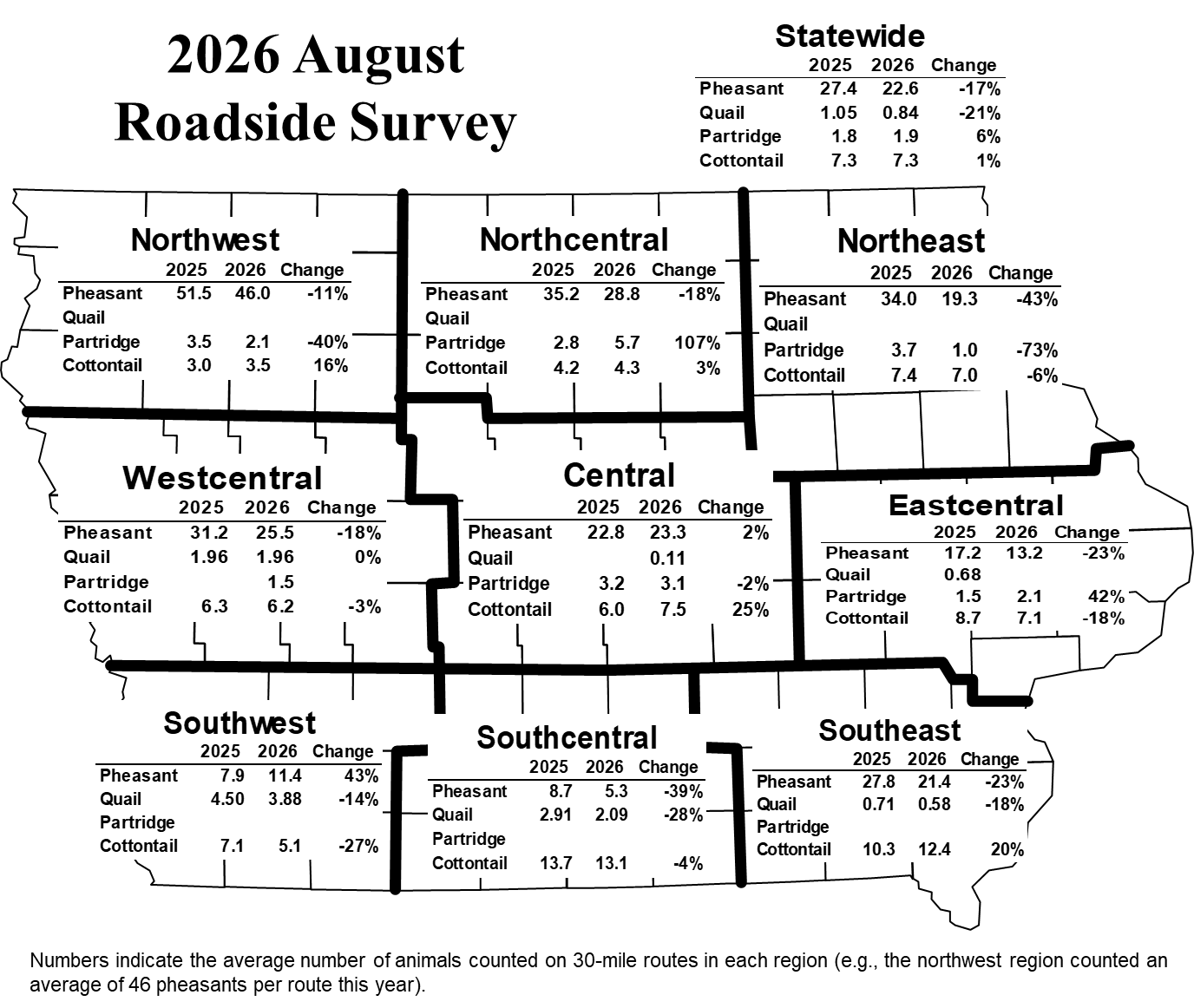
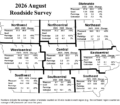
Northwest Iowa data (insert 9-region chart)
Looking at the statewide image of the nine regions of the August roadside count, the Northwest region continues to be the set of counties with the most birds. Even though the survey shows an 11% drop in numbers from 51.5 birds in 2025 to 46.0 in 2026, there is a stretch of counties that displayed the best roadside counts: Clay, Emmet, Dickinson, Lyon, Palo Alto, and Pocahontas counties. These counties provide the best winter and hunting habitat.
Checking with Greg Harson, District 1 Law Enforcement Supervisor for 17 counties in northwest Iowa, Harson is optimistic about the prospects for the 2026 pheasant season. “We are seeing a lot of pheasants, and overall, we think that hunters will find good numbers of birds.”
Of course, it all comes down to the habitat itself. Without the habitat, pheasant numbers plummet. Where the habitat is good and there was no flooding during the nesting season, numbers will be well above the district average.
Looking at the 10-year average in the Northwest area, that average is 33.5 birds per route, while the long-term average is 39.3, So, even though the average is down from 2025, the count is still well above both the 10-year and long-term averages.
Historically speaking, since 1980, that’s 46 years, only 13 times have the roadside county average been higher for the Northwest area than in 2026. The best ever was 81.2 birds per route in 2003.
Ironically, back in 1980 and 1981, the Southwest region was the ringneck king with 82.1 and 97.3 birds per route, respectively. Now in 2026, the Southwest region sits at 11.4 birds per route! Habitat and weather conditions most definitely are huge factors.
Statewide, there are habitat “warning clouds” on the horizon. Listed below, however, is a sad statement about habitat trends across the state of Iowa.
Upland habitat trends in Iowa
The report also takes a look at how upland habitat is continuing to change in Iowa. The influence of habitat changes on upland populations is more gradual than the impacts of annual weather. The effects of habitat change are only evident after looking at multiple years of surveys. Information from the USDA shows that between 1995 and 2025 Iowa lost 2,942 square miles of potential pheasant habitat. This habitat was a mix of small grains, hay, and Conservation Reserve Program (CRP) acres. To put this loss in perspective, 2,942 square miles is a strip of habitat 10 miles wide that would stretch from Omaha to Davenport.
The report also reflected on what has happened with the 2018 Farm Bill, which is still in place without a new Farm Bill for the past 8 years.
As of May, Iowa had 1.62 million acres enrolled, with 727,000 acres of Iowa entire enrollment expiring by fall of 2027. This equates to 44% of Iowa’s CRP! Unfortunately, as a result, Iowa will cease to be a major pheasant hunting state if the CRP is significantly diminished. Opportunities to enroll additional land into CRP in Iowa are declining. The 2018 Farm bill changed rental payments, so landowners do not receive fair market rent for their land, which has significantly reduced interest in the program.