
By Steve Weisman
Snelled spinners tipped with a nightcrawler, have been a popular and effective walleye fishing technique for many decades. Even so, anglers are always tweaking and working to make the technique better. That’s where last Saturday’s Fishing Seminar at the Okoboji Blue Water Festival was such a great opportunity.
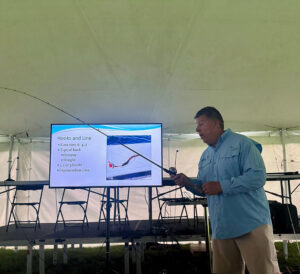
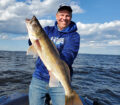
Sponsored by the Iowa Great Lakes Fishing Club (IGLFC), Joe Henry, Executive Director of Lake of the Woods Tourism, spoke with an angler’s enthusiasm sharing the secrets of his topic: “Master’s Level: Spinners for Walleyes.” Henry noted, “The nice thing about using a crawler harness is that you can fish them almost anywhere, shallow or deep, open water or weeds, rocks and reefs, clear or stained water and in lakes or rivers.”
Why the spinner?
It’s easy to cover a lot of water, and walleyes love them. Henry adds, “The spinner blade throws out a vibration, and walleyes with their lateral line can sense their prey (spinner/nightcrawler) before they see it. Combine that with various color options with beads and the blade, combined with fresh nightcrawler that is moving all over and has good smell, this technique is tough for a walleye to refuse.”
Most certainly, there are a lot of different shapes and sizes of blades. “Instead of changing the entire spinner rig each time I want to change things up, I use a quick-change clevis to help determine the blade size, shape or color that the walleyes want on that particular day.”
Most manufacturer designed snells run 3-4 feet in length. However, Henry likes to tie his own because he can determine different lengths. “My starting length is about 5’. If the water is stained and I want to shorten the snell, I just cut off whatever length I want. I like to use 15-pound Fluorcarbon line for its invisibility and toughness. If I happen to hook into a northern pike, I at least have a fighting chance of landing it. I like to use #2 or #4 octopus hooks, which are ideal for rigging live bait. I will then use 2 hooks for the worm harness, usually about two inches apart. If the fish are short striking, I will add a third hook.”
Next, the beads? What color? When you buy a manufactured spinner rig, you get a specific number of beads and a specific color. Many companies sell good spinners in today’s world with fluorocarbon line, good hooks and effective color patterns. “I actually have a plastic tackle box with all kinds of hooks, clevises and beads. Tackle stores now sell everything you need. I used to go to a hobby store and buy the beads in bulk. Now, tackle companies have realized the demand for those who tie their own spinners and they are readily available.”
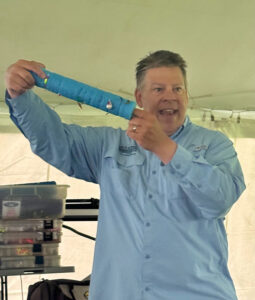
How do you store the completed spinner rigs? “I don’t like the small, manufactured rig holders. When they come off the holder, the line is really coiled. Instead, I like floating pool noodles! I simply cut them to size to fit in my small plastic container that is the right size to fit into my boat storage compartment and it works great. I also take a filet knife and every inch or so, score the noodle about an inch deep. This does a nice job of not only holding the harness in place, it protects it as well.”
Hooking the nightcrawler
Putting a fat juicy nightcrawler on the rig is an important step. “I start with a full nightcrawler, making sure the front hook goes through the front or head of the crawler. I make sure the crawler is straight and hook the second hook. If the tail off the back hook is super long, I will pinch it off so it is just a few inches long. This is plenty long to get bit and you will get more successful hooksets.
Fishing the crawler rig
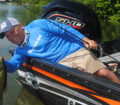
Henry pairs this with a 2-ounce bottom bouncer. “This may seem like a big weight, but a 2-ounce bouncer will let you keep the bait close to the bottom in both the shallows and deep. It can work as shallow as 5’ and up to 30’ of water. I like to keep the line at a 45-degree angle so I can feel the bottom better. I call it the angle of the dangle. You want to let your rod tip back every once in a while, to ‘feel’ the bottom bouncer touch the bottom, but don’t let it drag!”
Henry likes to troll at 1.0 to 1.5 mph and lets the walleyes tell him what they want. It is easier to troll with the wind, but if he must troll into the waves, “I will use the kicker to move the boat forward and my trolling motor to keep me going the right direction.”
When the walleye hits the crawler harness, Henry says, “It’s kind of feels like a wet sock. I will then drop the rod tip back (don’t give any slack) and after a couple seconds sweep the rod for a hookset. If the fish drops the bait, drop the rod tip back (don’t give any slack), and the fish will often come back again.”
Hold the rod? Not always, says Henry. “Putting the rod in the rod holder gives a much different movement that you don’t get when you hold the rod. When a walleye strikes, the rod will load up and the fish often hooks itself.”
In really clear water, you might have to pull behind planer boards or use a bullet sinker to get the bait away from the boat.
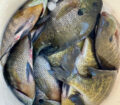
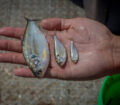
Having trouble with pesky panfish
On some lakes, small bluegills and perch are notorious bait stealers. “If you feel a rat-a-tat-tat over and over, you’re going to go through lots of bait. When this happens, I often go with an imitation crawler. My favorite in this case is Uncle Josh Pork. That crawler is like leather with a slimy juice on it. It is 7” long, so I cut it in half for a two-hook harness. Others fake crawlers work well, too, but that is my go to. You’ll know it’s not a panfish when you feel the thump!”
Working together
“As humans, we often do what we have always done, because it’s what we know…even if it doesn’t work. If you are fishing with a buddy, start with different color spinners to see what the walleyes want. Try something for an hour or so before changing patterns or baits.”
Protecting our lakes
Henry’s closing message was sharing the mission: KEEP IT CLEAN, a clean water initiative started on the Lake of the Woods in 2012. Over 60 organizations and over 1200 lakes now support the initiative with a new Keep It Clean Law now on the books in the state of Minnesota. Henry hopes that Iowans will consider joining this effort and making it KEEP IT CLEAN in Iowa to go along with the mission of the Okoboji Blue Water Festival!
A message from Joe Henry
From his early morning walk at the park to get coffee, to the seminar and the many talks and discussions after the seminar, Henry reflects on his entire day. “I was so impressed. Folks were so authentically welcoming!”
Henry continued, “The seminar was well attended and was set up so everyone could benefit. After the seminar, we had a Q & A just outside of the IGLFC’s booth. It was an honor to share the day with the great people in this part of Iowa, and I hope to have the opportunity to come back soon! Thanks to the fishing club for inviting me down and for their great hospitality!”
Photos by Steve Weisman